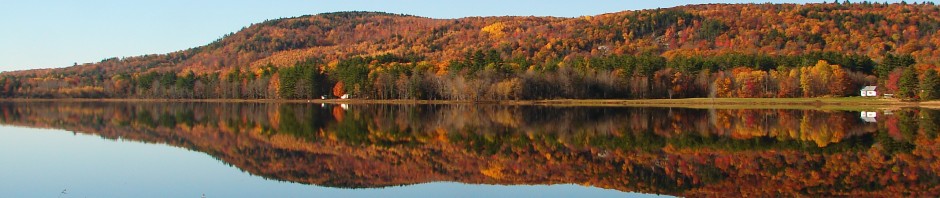
Raging at Aging: The Wolfe is always at the door
The other day I learned that a college acquaintance of mine named Peter drowned in the St. Lawrence River at the age of 67. He and his family had made the Thousand Islands a part of their lives for generations. He would swim its cool waters each summer day with strength and joy. I only knew him superficially back in the day. We were in different fraternities and played different sports and life was so hectic when there were so many decades of clumsy adolescence still to come. But he always seemed to be a happy and caring person as he went about the hard work of being young and full of promise in a world that expects so much of each new crop of youthful idealists. From the poignant obituaries it is clear that Peter lived a fine, meaningful, much beloved life…maintaining and enhancing his high ideals over the many challenging decades of our times while making the world a better place. For the last 45 years I had not exchanged a word with him in person or through letters or on the Internet. Yet the cold, immutable news of his passing hit me hard. And it was more than the shiver of mortality that becomes all too familiar to us all as the earth performs its graceful revolutions.
This tragic news got me thinking about this hideous thing called death. Not the usual hand-wringing and “why me?‘ or “why not me?” rants or clichés about the fragility of the mortal coil, the cruel random swings of the reaper’s scythe, and all the stuff of great literature and poetry about gathering rosebuds while we may. No, I just thought that the whole nightmare that everyone I know or will ever know or have ever known actually dying and being gone for eternity really sucks. (Please pardon my elegant vocabulary…we can’t all be Shakespeare) And it may be that my generation and my children’s will be the last human cohorts to have to worry about our cursed mortality. But for war and crime and accidents and suicide, or perhaps some cosmic catastrophe from a cometary collision to a nearby supernova, the children born in 2050 in the wealthy quarter of the world may live forever or close to it, at least in some cybernetic, non-corporeal form that captures a reasonable semblance of reality and conscious thought with the personality intact.
But until that bitch goddess of immortality arrives as an option to be weighed cautiously by those too easily bored by life itself, we the vulnerable, mortal, fragile billions of people struggling against the big clock, and inevitably losing the battle, must face the end of all that we tried so valiantly or so miserably to become. So my thoughts turn to the many people in our lives whom we will never see again…and to the countless thousands of others who should have been in our lives but remain unknown to us. It is time to start raging against aging.
I never want to hear from someone who says they lacked the time to read an email where I reached out to them with affection and honesty and intelligence. Or that they passed through Maine on I-95 and didn’t want to “disturb me” by stopping in for a chat or a snowshoe or a ballgame or a meal at a local watering hole. Or that they couldn’t make it to the movie or batting practice or to have a catch in the yard or play fetch with the dogs or because it was too cold or hot or foggy or whatever. I never again want to waste time with people who are too rushed to savor the sweet moments, or who refuse to laugh or cry or scream at the timeless lyrics of an old song, or who disdain working for truth and compassion and respect for everyone, or who think it foolish to place integrity above accumulation …and who are too focused on or bewildered by the onrushing tide of events to see how their failure to act or to vote for the best people or to live their ideals is creating the world they now may fear or abhor. I never again want to hear of someone suddenly gone forever and to know that I never reached out to them when I had the chance…perhaps when I was driving past the lovely Thousand Islands that are an apt metaphor for our separate lives as the churning waters rise and the currents tug us under, one at a time.
Thomas Wolfe (the one who wrote “Of Time and the River” in 1935 and “Look Homeward, Angel” and will be read and remembered for ten thousand years, not the one who brought us the “Electric Kool-Aid Acid Test” and the “Bonfire of the Vanities” in the modern era) wrote of this excruciating longing for truth and passion and reality and goodness better than anyone I have ever encountered. I thank my dear brother, Jon, for sending this excerpt from our late father’s favorite author, Thomas Wolfe, to me yesterday from Budapest:
“Why are we all so false, cowardly, cruel, and disloyal toward one
another and toward ourselves? Why do we spend our days in doing
useless things, in false pretense and triviality? Why do we waste our
lives–exhaust our energy–throw everything good away on falseness and
lies and emptiness? Why do we deliberately destroy ourselves this way,
when we want joy and love and beauty and it is all around us in the
world if we would only take it? Why are we so afraid and ashamed when
there is really nothing to be afraid and ashamed of? Why have we
wasted everything, thrown our loves away, what is this horrible thing
in life that makes us throw ourselves away–to hunt out death when
what we want is life? Why is it that we are always strangers in this
world, and never come to know one another, and are full of fear and
shame and hate and falseness, when what we want is love? Why is it?
Why? Why? Why?”
Thomas Wolfe, “Of Time and the River”, p. 246-47.
Why indeed! Wishing you and yours love and good health this October, and in all the passing seasons to come…
Roy
p.s. And if you can’t get enough of Thomas Wolfe, here is most of his classic chapter, “October Has Come Again”. Each year I would read excerpts of this passage to my students of economics on the first class day in October in New England. Even for the young, Wolfe’s poetry would bring tears to their awakening eyes. And it always seemed to be so much more important than the planned subject matter of the session. Again, from “Of Time and the River”, p. 327-34: I wish you will read it aloud, slowly, on a golden day this autumn…and that your passion for life courses through every moment…
“Now October has come again which in our land is different from
October in the other lands. The ripe, the golden month has come again,
and in Virginia the chinkapins are falling. Frost sharps the middle
music of the seasons, and all things living on the earth turn home
again. The country is so big you cannot say the country has the same
October. In Maine, the frost comes sharp and quick as driven nails;
just for a week or so the woods, all of the bright and bitter leaves,
flare up: the maples turn a blazing bitter red, and other leaves turn
yellow like a living light, falling about you as you walk the woods,
falling about you like small pieces of the sun, so that you cannot say
where sunlight shakes and flutters on the ground and where the leaves.
“Meanwhile the Palisades are melting in massed molten colours, the
season swings along the nation, and a little later in the South dense
woodings on the hill begin to glow and soften, and when they smell the
burning wood-smoke in Ohio children say: ‘I’ll bet that there’s a
forest fire in Michigan.’ And the mountaineer goes hunting down in
North Carolina; he stays out late with mournful flop-eared hounds, a
rind of moon comes up across the rude lift of the hills: what do his
friends say to him when he stays out late? Full of hoarse innocence
and laughter, they will say: ‘Mister, yore ole woman’s goin’ to whup
ye if ye don’t go home.'”
Oh, return, return!
“October is the richest of the seasons: the fields are cut, the
granaries are full, the bins are loaded to the brim with fatness, and
from the cider-press the rich brown oozings of the York Imperials run.
The bee bores to the belly of the yellowed grape, the fly gets old and
fat and blue, he buzzes loud, crawls slow, creeps heavily to death on
sill and ceiling, the sun goes down in blood and pollen across the
bronzed and mown fields of old October.
“The corn is shocked: it sticks out in hard yellow rows upon dried
ears, fit now for great red barns in Pennsylvania and the big stained
teeth of crunching horses. The indolent hooves kick swiftly at the
boards, the barn is sweet with hay and leather, wood and apples–this,
and the clean dry crunching of the teeth is all: the sweat, the
labour, and the plough are over. The late pears mellow on a sunny
shelf; smoked hams hang to the warped barn rafters; the pantry shelves
are loaded with 300 jars of fruit. Meanwhile the leaves are turning,
turning, up in Maine, the chestnut burrs plop thickly to the earth in
gusts of wind and in Virginia the chinkapins are falling.
“There is a smell of burning in small towns in afternoon, and men with
buckles on their arms are raking leaves in yards as boys come by with
straps slung back across their shoulders. The oak leaves, big and
brown, are bedded deep in yard and gutter: they make deep wadings to
the knee for children in the streets. The fire will snap and crackle
like a whip, sharp acrid smoke will sting the eyes, in mown fields the
little vipers of the flame eat past the black coarse edges of burned
stubble like a line of locusts. Fire drives a thorn of memory in the
heart.
“The bladed grass, a forest of small spears of ice, is thawed by noon:
summer is over but the sun is warm again, and there are days
throughout the land of gold and russet. But summer is dead and gone,
the earth is waiting, suspense and ecstasy are gnawing at the hearts
of men, the brooding prescience of frost is there. The sun flames red
and bloody as it sets, there are old red glintings on the battered
pails, the great barn gets the ancient light as the boy slops homeward
with warm foaming milk. Great shadows lengthen in the fields, the old
red light dies swiftly, and the sunset barking of the hounds is faint
and far and full of frost: there are shrewd whistles to the dogs, and
frost and silence–this is all. Wind stirs and scuffs and rattles up
the old brown leaves, and through the night the great oak leaves keep
falling.
“Trains cross the continent in a swirl of dust and thunder, the leaves
fly down the tracks behind them: the great trains cleave through gulch
and gulley, they rumble with spoked thunder on the bridges over the
powerful brown wash of mighty rivers, they toil through hills, they
skirt the rough brown stubble of shorn fields, they whip past empty
stations in the little towns and their great stride pounds its even
pulse across America. Field and hill and lift and gulch and hollow,
mountain and plain and river, a wilderness with fallen trees across
it, a thicket of bedded brown and twisted undergrowth, a plain, a
desert, and a plantation, a mighty landscape with no fenced niceness,
an immensity of fold and convolution that can never be remembered,
that can never be forgotten, that has never been described–weary with
harvest, potent with every fruit and ore, the immeasurable richness
embrowned with autumn, rank, crude, unharnessed, careless of scars or
beauty, everlasting and magnificent, a cry, a space, an
ecstasy!–American earth in old October.
“And the great winds howl and swoop across the land: they make a
distant roaring in great trees, and boys in bed will stir in ecstasy,
thinking of demons and vast swoopings through the earth. All through
the night there is the clean, the bitter rain of acorns, and the
chestnut burrs are plopping to the ground.
“And often in the night there is only the living silence, the distant
frosty barking of a dog, the small clumsy stir and feathery stumble of
the chickens on limed roosts, and the moon, the low and heavy moon of
autumn, now barred behind the leafless poles of pines, now at the
pine-woods’ brooding edge and summit, now falling with ghost’s dawn of
milky light upon rimed clods of fields and on the frosty scurf on
pumpkins, now whiter, smaller, brighter, hanging against the steeple’s
slope, hanging the same way in a million streets, steeping all the
earth in frost and silence.

 Voyages of a Flying Dutchman...................... blog by Roy Van Til of Vienna, Maine
Beautiful piece of wiriting Roy…Thank you. Enjoying my Life on this lovely day in the mountains, watching the baseball playoffs series. I promise if I get to Maine I will stop by for a chat, cup of coffee, or perhaps some batting practice. Have a great week.
Best,
Michael
Hey Michael, Thanks so much for your generous words. So far you are one of two people following my posts. I really appreciate that. Glad to hear you are enjoying a great day in the Rockies. I watched the Yanks lose (that always makes my day as a Red Sox fan) and now Linda and I are watching “The Fighter.” A super flick. Raining like crazy here, but all is good anyway.
And the next time I am in Colorado, I will look you up and you can show me a great trail to hike. Here is a shot I took last year when I went out to Boulder for my nephew’s wedding: Nothing that fearsome in Maine! And some batting practice sounds great. I have a ton of softballs my father-in-law gathered from a public park…some had only been hit once!
RVT
Thanks for the Thomas Wolfe quotations and making them lengthy. Good for you to have read the one about October to your classes. I once read a poem or two when teaching about the weather or fossils. I am also reminded of what Aldo Leopold wrote about October in Sand County Almanac. He describes the brilliant yellow of tamarack or larch trees when out hunting, or at least that is the image that comes to mind from my memory of reading of his book. I shall get it out soon to refresh my memory and to celebrate October in the fashion that you have modeled.
I was struck by Thomas Wolfe’s imagery that so much of it is rural and involves farms and railroads. Only at the end is there mention of trees along a street in a town or city. His writing from the 1930s and his earlier upbringing had him inhabiting a different world than the one that now seems to exist. Not that one can’t find his world today, but our urban existence forces a different view.
Keep writing, Tom
Thank you for enjoying my essay. Best to you, Roy
Thank you for your kindness, Michael. Best to you, Roy Van Til